



Manager
Menu: Extras → IndexNow.
Above the tabs is indexnow_intro_msg. At the bottom of Status, indexnow_disclaimer warns that IndexNow does not guarantee indexing, only notification (Yandex).
Status
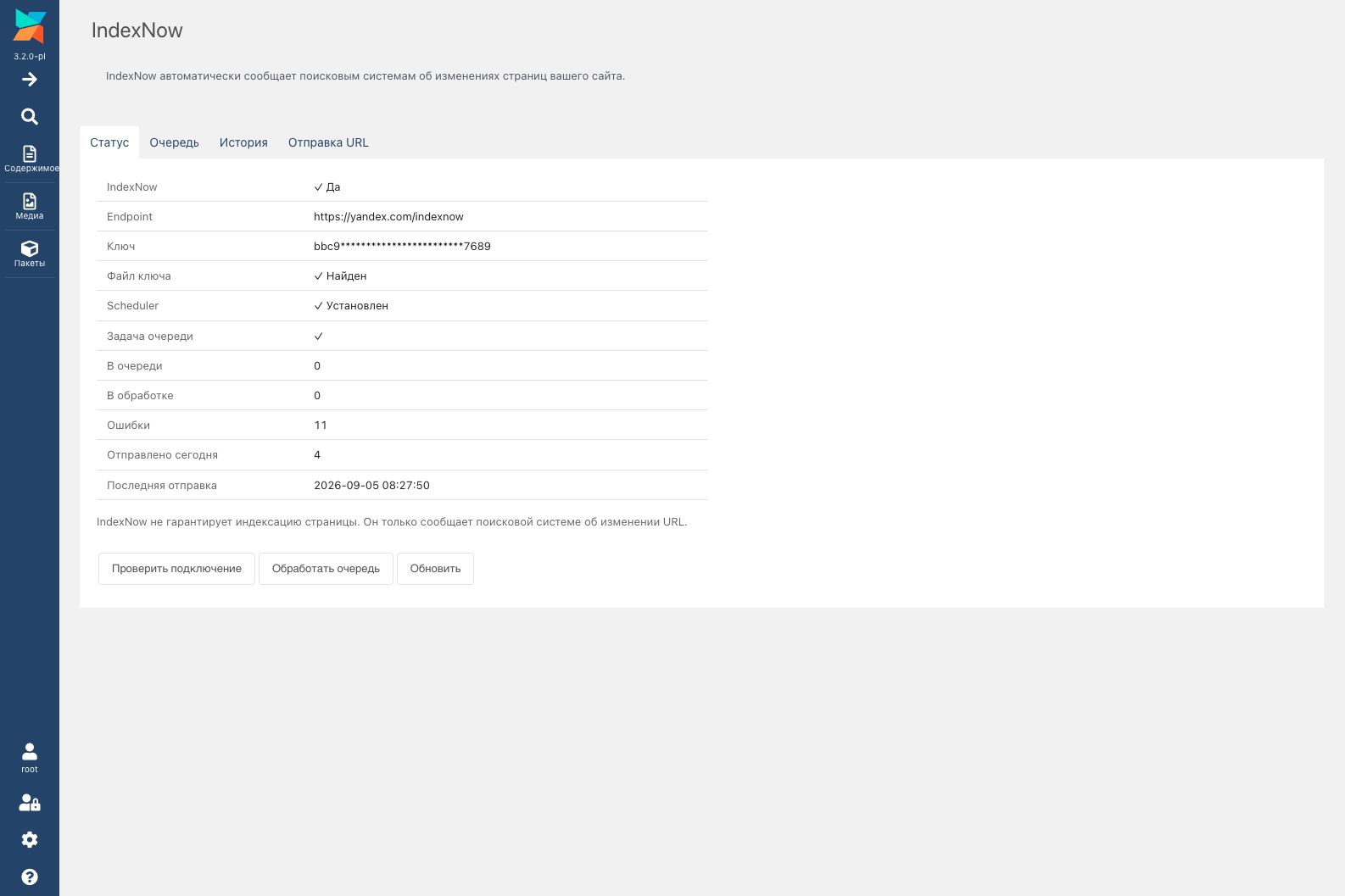
- whether IndexNow is enabled
- endpoint
- key (masked in the UI)
- whether the key file was found
- Scheduler: installed, queue task present, interval
- next run (
next_run), overdue flag, manual task run URL (run_url) - counters: pending, processing, failed, sent today
- last send time
“Sent today” counts history rows with status success for the current day. The worker writes success / failed / retry.
Buttons:
- Test connection: key, file, endpoint reachability. The Scheduler task is also created when Status loads if Scheduler is installed and the task is missing.
- Process queue: one worker pass immediately, without waiting for tick
- Refresh: reload status
Queue
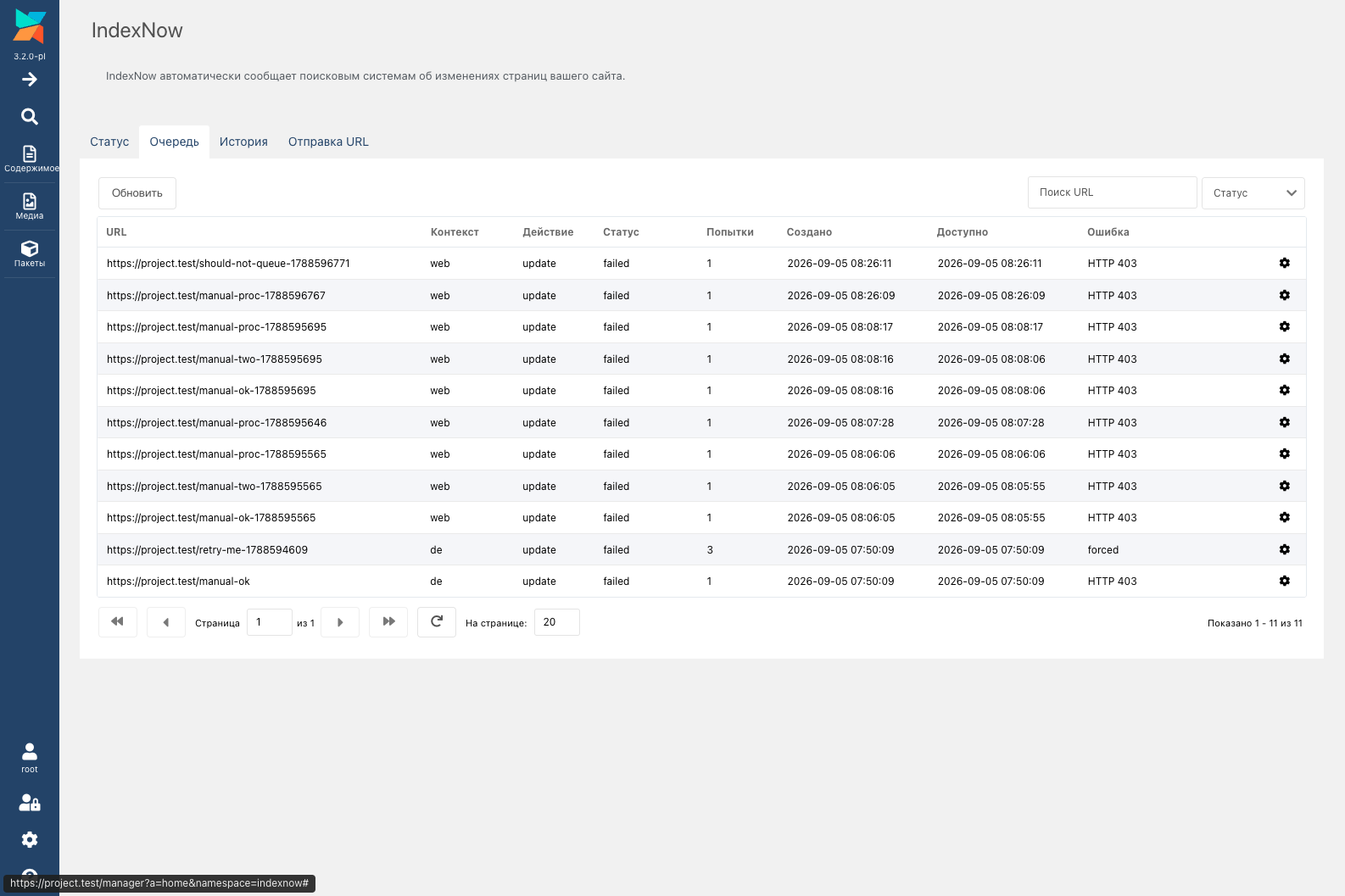
Rows in pending / processing / failed and retry statuses.
Columns: URL, context, action (update / delete), status, attempts, dates, error.
Row actions:
- Retry: sets the row to
pending, zerosattempts, and clearsavailable_atandlast_error. The next worker pass starts a full attempt series. - Delete: remove the row without sending
Filters: URL search, status. There is no action filter on this tab (only on History). The status filter includes success, but a successful row is deleted from the queue table, so that filter is empty.
History
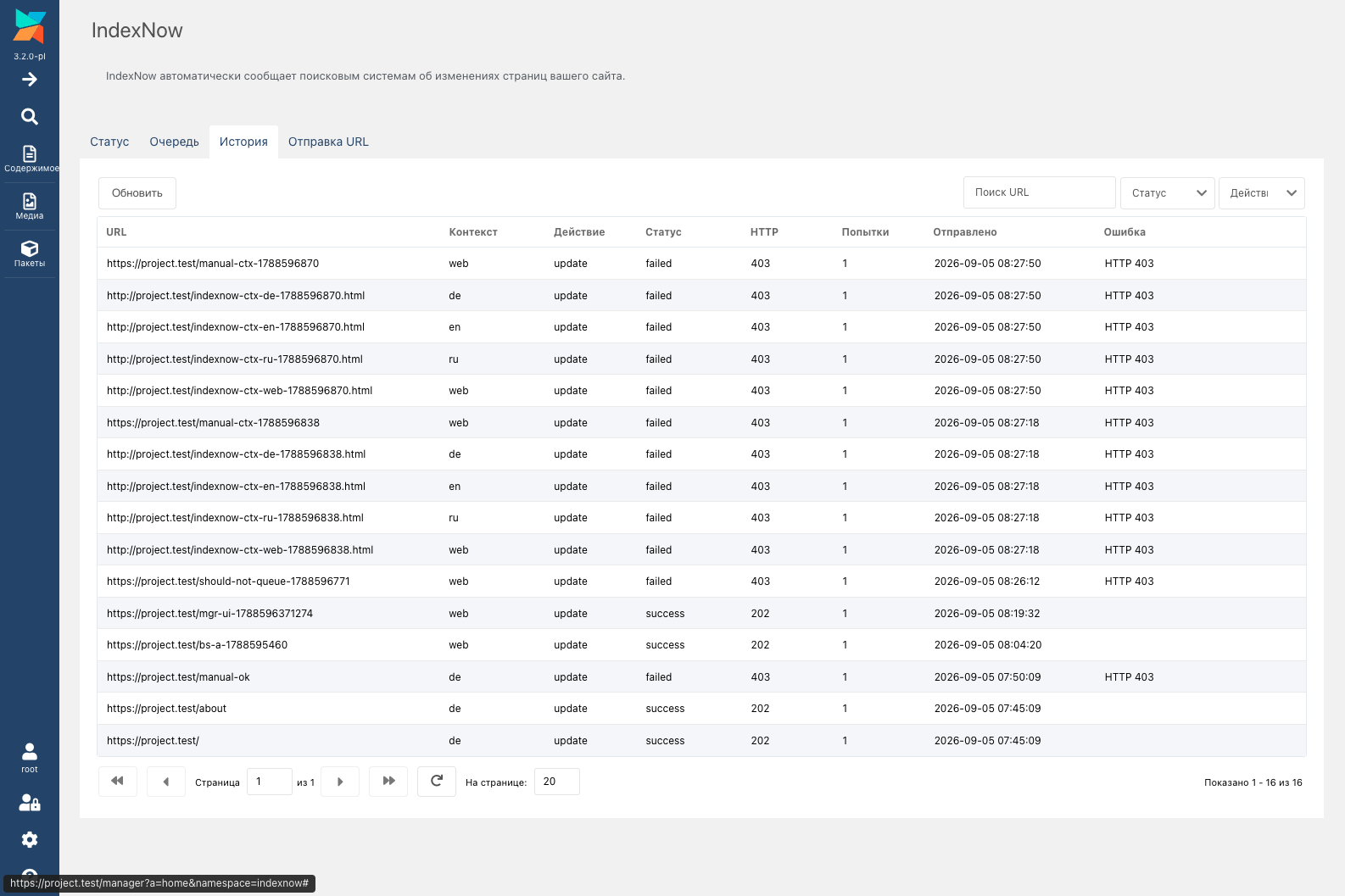
Delivery log: URL, HTTP code, status (success / failed / retry), time.
Old rows are removed per indexnow_history_retention_days during worker runs.
Send URL
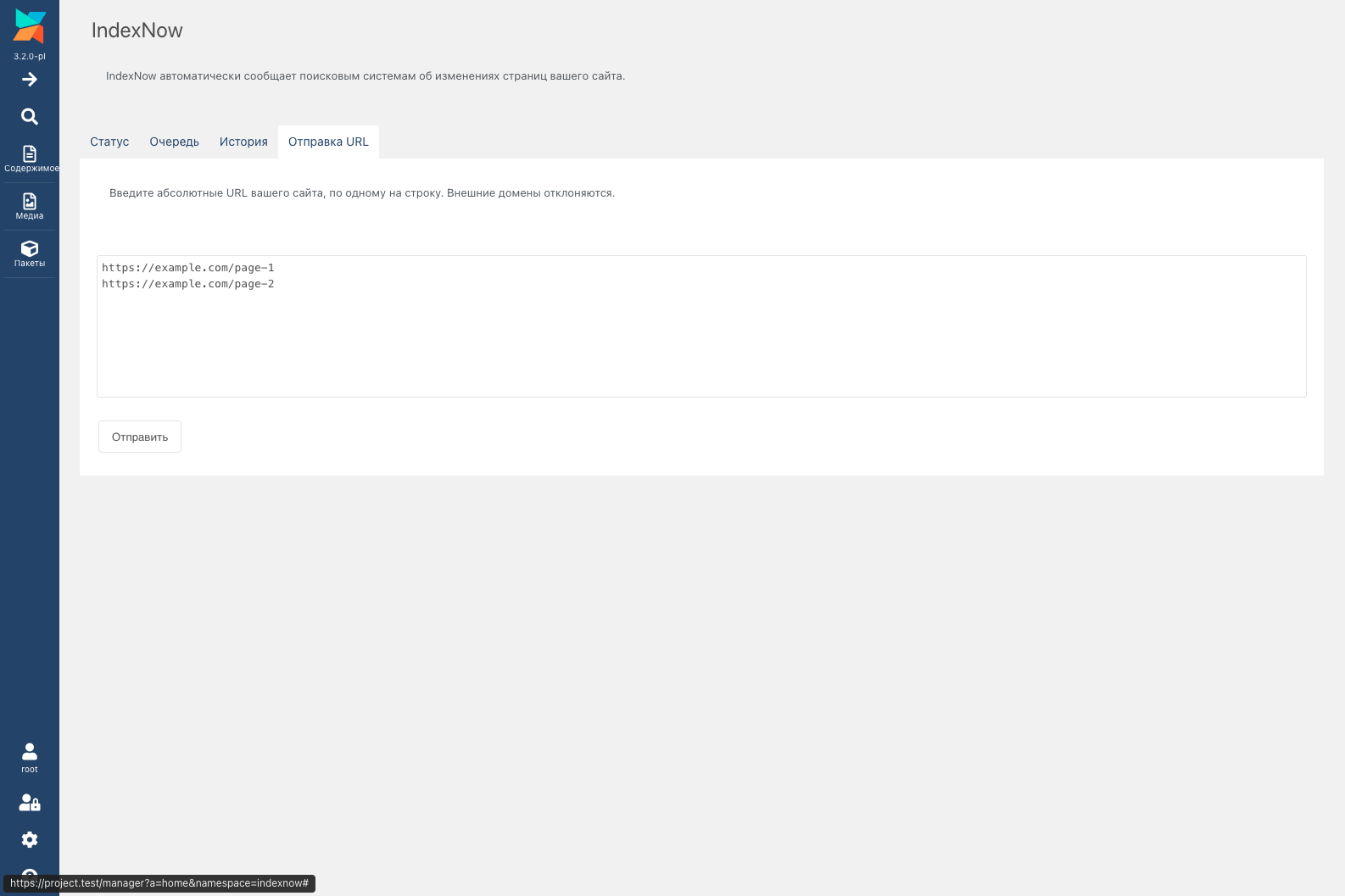
One absolute site URL per line.
Example:
text
https://example.com/page-1
https://example.com/page-2
Rejected:
- hosts outside your MODX contexts (SSRF protection)
localhost,metadata.google.internal, private/reserved IPs in the host (same rules as resource URLs)
Each accepted URL is enqueued with action update. You cannot enqueue delete manually.
Send enqueues the URLs and calls kickQueue(). With the queue on, a queue tick is scheduled in the same request (shutdown, up to 25 URLs). With the queue off, worker->run() runs immediately for the full indexnow_batch_size.